

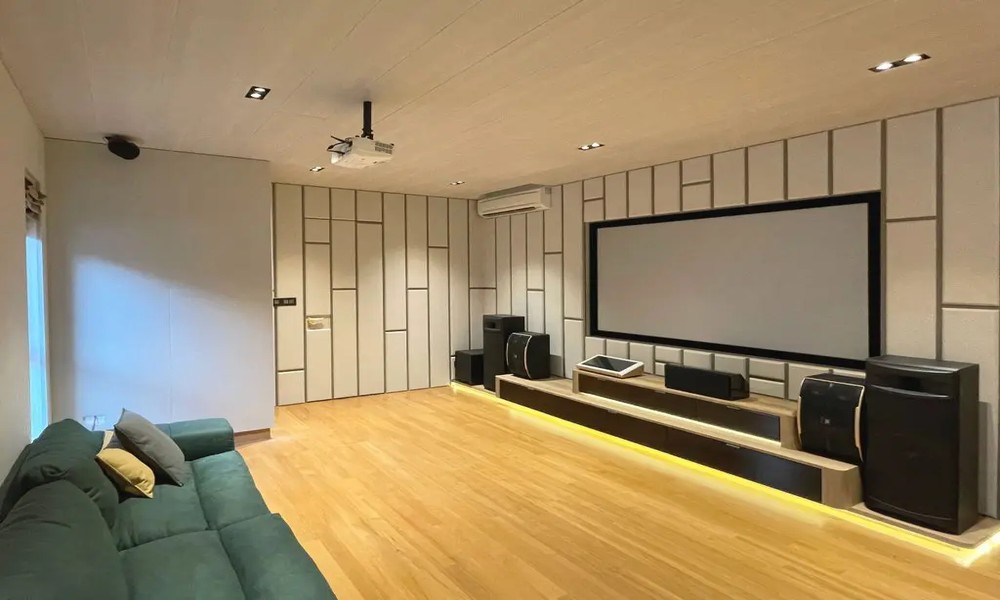
Spend a few minutes in a café, office, or even a modern living room, and you’ll start to notice something interesting.
Two spaces can look almost identical-same clean design, same open layout, same materials-but one feels calm and easy to be in, while the other feels noisy, slightly stressful, and harder to focus on.
It’s not always obvious why.
More often than not, the difference comes down to how sound is handled within the space. And in Singapore, where environments are dense and highly active, that difference becomes even more noticeable.
That’s why acoustic treatments in Singapore are quietly shifting from being a “nice-to-have” to something people expect as part of a well-designed space.
It Usually Starts With a Problem People Can’t Quite Explain
Most people don’t walk into a room and immediately say, “This space has poor acoustics.”
- “It feels a bit noisy in here”
- “I keep having to repeat myself”
- “It’s hard to focus for long”
These are everyday observations, but they all point to the same issue-sound is not being controlled properly.
In many cases, the space itself is causing the problem. Sound reflects off surfaces, overlaps with other sounds, and lingers longer than expected.
Once you notice it, it’s hard to ignore.
Why Singapore Spaces Are More Affected Than Most
Singapore’s built environment naturally makes sound control more important.
Spaces tend to be:
- Compact and efficient
- Closely connected to neighbouring units
- Designed for multiple uses within the same area
This means sound doesn’t have much room to dissipate. Instead, it reflects, builds up, and travels easily between zones.
At the same time, there’s constant external noise from:
- Traffic and public transport
- Nearby construction
- Daily urban activity
All of this combines to create a layered sound environment where internal and external noise interact.
Without some form of control, it quickly becomes overwhelming.
Design Trends Have Made Acoustics More Noticeable
Modern interiors in Singapore often follow a clean, minimal aesthetic.
You’ll see:
- Glass partitions instead of solid walls
- Polished tiles or concrete flooring
- Open layouts with fewer physical barriers
- Minimal use of soft furnishings
These choices look great, but they come with a trade-off.
Hard surfaces reflect sound. So instead of being absorbed, sound waves bounce around repeatedly, increasing echo and overall noise levels.
This is why a beautifully designed space can still feel uncomfortable after spending time in it.
The Shift From Aesthetic Design to Functional Comfort
There’s been a gradual shift in how people think about interiors.
Before, the focus was mainly on:
- How a space looks
- How efficiently it’s laid out
Now, more attention is being given to:
- How a space feels
- How it performs during everyday use
Sound plays a big role in that experience.
A room that looks good but sounds harsh or echoey doesn’t feel complete. That’s why acoustic treatment is now being considered earlier in the design process rather than added as an afterthought.
Workspaces Have Changed the Most
One of the biggest drivers of this shift is the modern workplace.
Offices today are:
- More open and collaborative
- Designed for flexibility
- Filled with constant interaction
While this supports teamwork, it also increases noise levels significantly.
Without proper sound control:
- Conversations overlap
- Phone calls become distracting
- Focus becomes harder to maintain
As a result, companies are starting to treat acoustics as part of productivity, not just design.
Installing acoustic solutions is no longer just about reducing noise, but about creating an environment where people can actually work comfortably.
Homes Are Facing the Same Challenge
It’s not just commercial spaces that are changing.
Homes in Singapore are also evolving.
With more people working remotely or spending extended time indoors, living spaces now need to support:
- Work calls and virtual meetings
- Study and focused tasks
- Shared activities within the same room
This increases sensitivity to sound within the home.
Echo, background noise, and sound travel between rooms become much more noticeable when you’re using the space throughout the day.
That’s why more homeowners are exploring acoustic treatment options to improve both comfort and functionality.
What Makes Acoustic Treatment So Appealing
One of the reasons acoustic solutions are becoming more common is how practical they are.
They don’t require major structural changes.
Instead, they can be introduced through:
- Wall-mounted panels
- Ceiling treatments
- Targeted placement in high-impact areas
This makes them:
- Easy to install
- Flexible to adjust over time
- Suitable for both new and existing spaces
In many cases, people only realise how effective they are after experiencing the difference firsthand.
It Solves Problems Without Changing How You Use the Space
One of the biggest advantages of acoustic treatment is that it works quietly in the background.
It doesn’t:
- Take up usable space
- Interfere with layout or movement
- Require people to change how they use the room
Instead, it improves the environment itself.
Conversations become clearer. Noise feels more controlled. The space becomes easier to be in for longer periods.
It’s a subtle change, but one that affects everything.
Businesses and Designers Are Planning for It Earlier
Another clear sign that acoustic treatment is becoming standard is when it’s introduced during the planning stage.
Instead of reacting to complaints later, more projects now:
- Include acoustic considerations during design
- Integrate panels into the overall aesthetic
- Plan layouts with sound control in mind
This approach saves time and avoids the need for retrofitting later on.
It also results in spaces that feel complete from the start, not just visually, but functionally.
It Improves More Than Just Sound
Better acoustics don’t just reduce noise-they improve the overall experience of a space.
A well-treated environment tends to feel:
- Calmer and less stressful
- More organised and structured
- More comfortable to spend time in
This has a direct impact on:
- Productivity in offices
- Customer experience in commercial spaces
- Daily comfort in homes
People may not always notice the panels themselves, but they notice how the space makes them feel.
Final Thoughts
As Singapore continues to develop more compact, multi-functional, and design-driven spaces, sound control is becoming harder to ignore.
That’s why acoustic treatments are steadily becoming a standard fix rather than an optional upgrade.
They don’t drastically change how a space looks, but they completely change how it performs.
And in environments where people live, work, and interact closely, that shift from “just designed” to “well-functioning” is exactly what makes a space truly work.
