

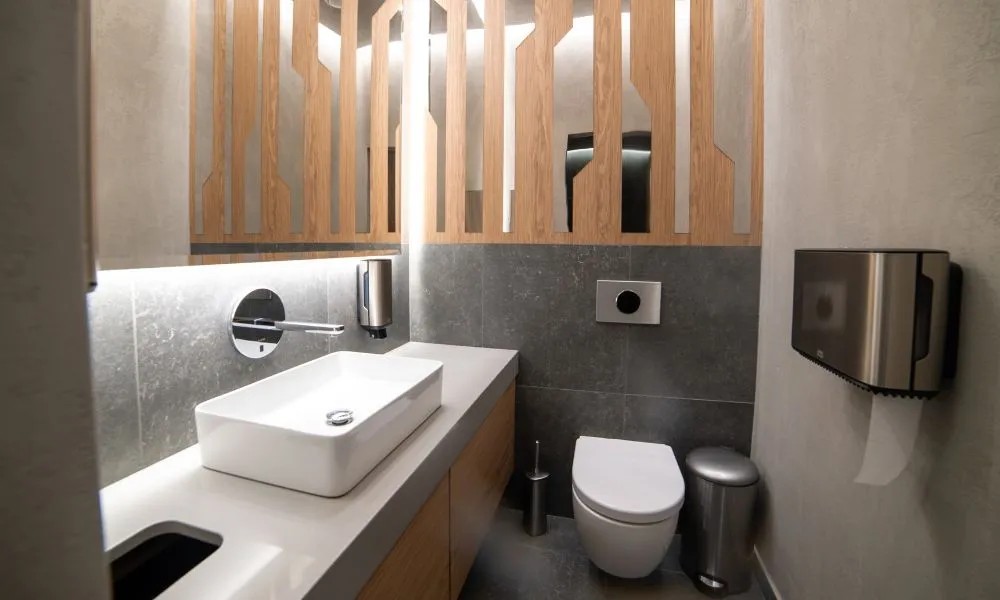
Commercial washroom technology integration has expanded significantly beyond sensor-operated faucets and automatic flush valves. Connected dispenser systems with consumption monitoring, occupancy sensing for real-time cleaning dispatch, and hygiene compliance monitoring are now commercially available and being incorporated into the facility operations infrastructure of high-performance commercial buildings.
The connected building ecosystem that governs HVAC, lighting, and access control is increasingly extending to washroom operations, creating opportunities for facility managers to monitor, analyze, and optimize restroom operations with the same data fidelity applied to energy systems.
How Connected Dispenser Systems Reduce Supply Waste and Labor
IoT-connected soap and paper towel dispensers provide real-time consumption data and low-supply alerts that allow facilities teams to deploy restocking labor based on actual usage patterns rather than fixed schedules. Pilot deployments in commercial office facilities have demonstrated 15 to 25 percent reductions in consumable waste and 10 to 20 percent reductions in restocking labor hours through elimination of unnecessary visits to fully stocked facilities.
Data from connected dispenser systems also enables consumption analytics that identify unusual usage patterns, detect potential vandalism events, and support consumable purchasing optimization.
How Occupancy Monitoring Changes Cleaning Operations
Occupancy-sensing systems that integrate with building access control or use dedicated people-counting technology can provide real-time restroom utilization data that triggers cleaning dispatch based on actual usage thresholds rather than fixed cleaning intervals. Connecting this data to commercial facility washroom products specification processes allows facilities managers to identify which locations generate the highest usage intensity and to specify accordingly, concentrating high-durability products in high-usage locations.
What Air Quality Monitoring Integration Adds to Washroom Operations
Real-time air quality monitoring integrated with building HVAC systems can track restroom VOC levels, humidity, and odor indicators, triggering ventilation responses and cleaning alerts before occupant complaints are generated. This monitoring capability is increasingly incorporated into WELL and other healthy building certification frameworks as a performance verification mechanism.
How Digital Maintenance Records Change Lifecycle Documentation
Connected washroom accessories that generate digital maintenance records, including sensor operation logs, dispenser actuation counts, and service event documentation, create a lifecycle data record that supports warranty claims, maintenance budget planning, and product performance benchmarking across facilities.
Technology integration in commercial washroom design is moving from individual sensor-operated fixtures toward integrated systems that provide facility managers with operational data, automated alerts, and performance analytics. The transition requires coordination between accessory specifications, building automation systems, and facilities management software platforms that most commercial facilities teams are still developing the operational infrastructure to fully utilize.
